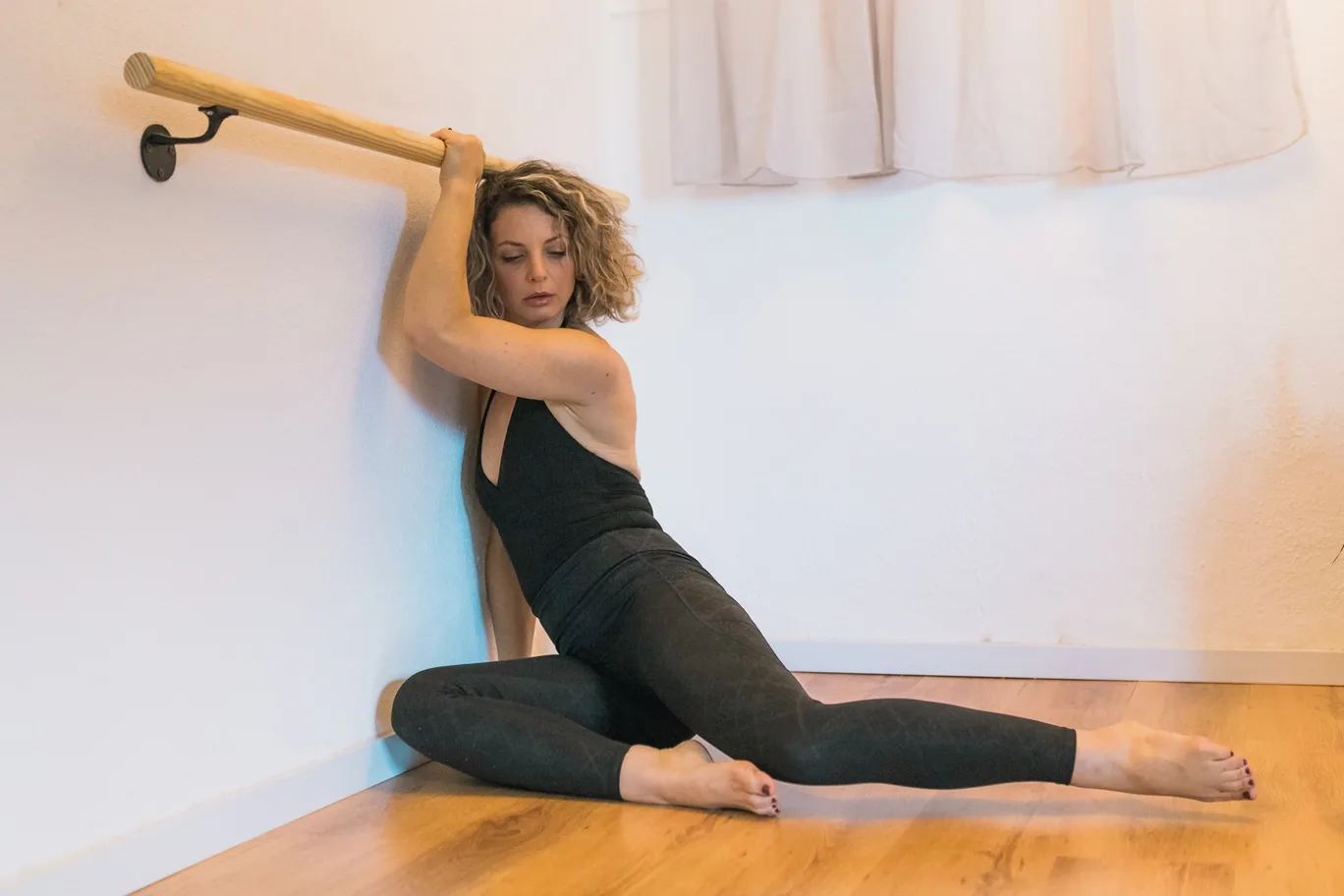
Something shifts in your thirties, and more so in your forties. You feel it before you can name it. Recovery takes longer. The workouts that used to feel right start feeling like too much, or not quite the right thing. Your body is asking for something different.
I've spent years working with women through exactly this transition, and I went through it myself. Barre is what I landed on, and what I've built my studio around. Here's why.
Built for the female body
The original barre method came out of ballet — women training to stay strong, aligned, and injury-free across decades of demanding work. Lotte Berk developed it for her own body, after a back injury, and it has been refined by generations of women teaching women ever since. That lineage matters. Most fitness methods were designed around a male template and adapted for us afterwards. Barre wasn't.
It works the small stabilising muscles around the hips, spine, and shoulders — the ones that hold you together day to day. These are what keep you moving well when you're carrying a toddler, standing through a long day, or sitting at a desk for hours. Heavy lifting alone won't train them. Barre does.
The pelvic floor and deep core get real attention here, integrated into almost every movement rather than tacked on at the end. If you've been pregnant, or are moving toward perimenopause, this is not a small detail.
Low impact is not low effort
Your legs will shake within minutes. You'll sweat. You'll feel muscles you didn't know existed. What you won't do is pound your joints to get there.
That trade becomes more important with age. Estrogen, which keeps cartilage and connective tissue resilient, begins to decline in our late thirties. High-impact training that felt fine at twenty-five quietly accumulates by forty. Barre gives you the intensity without the wear.
Posture, alignment, and the things that go quietly backwards
Three things slip after thirty if you don't actively train them: posture, balance, and bone density. Barre works on all three. The isometric holds load the bones without impact. The postural work undoes the hours we all spend hunched at a laptop. The single-leg balances train the stabilisers that keep you steady — the same ones that matter more with every passing decade.
You won't notice it after one class. You'll notice it two months in, when you're standing taller without thinking about it. When a long flight doesn't wreck your back. When you feel more at home in your body than you did before.
Why barre, specifically, and why now
There are plenty of workouts that will get you sweating. Fewer were built with the female body in mind, and even fewer have the kind of refinement barre has after six decades of being taught and evolved.
This is also why I added Power to the studio. Barre gives you posture, control, and alignment. Strength training gives you the muscle density and bone strength research now tells us we need as we move through our forties and beyond. Together, they're the whole picture. But barre is the foundation — it teaches you how to move well before you ask your body to lift heavy.
What to expect in your first class
The movements are small and harder than they look. Your legs will shake — that's the muscle working at a depth it isn't used to. Stay with it. By the fourth or fifth class, the shake becomes familiar, and you start feeling strong in places you didn't know needed strengthening.
You don't need to be flexible. You don't need a dance background. You don't need to already be in shape. Just come in.