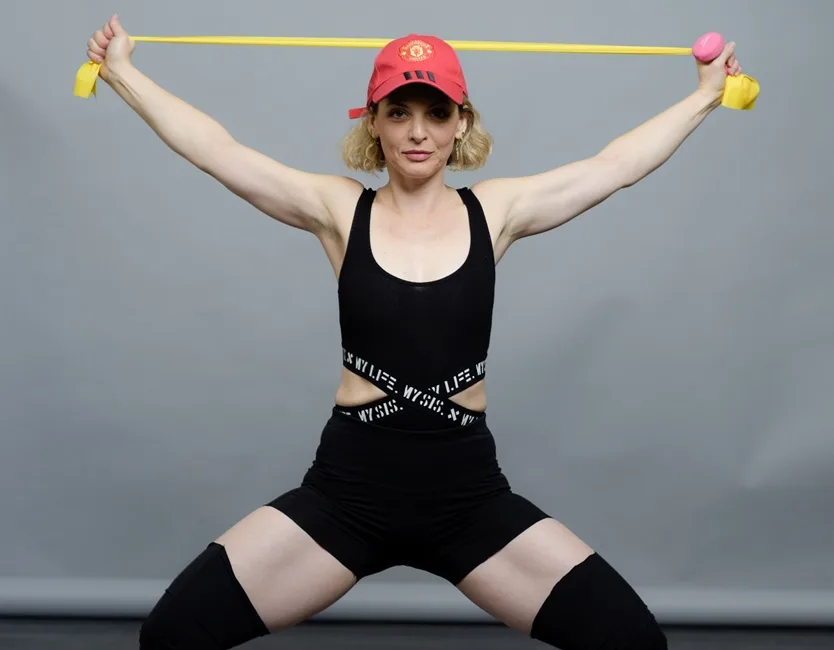
Menopause isn't a moment. It's a decade, sometimes longer. Perimenopause usually starts in our early forties, often earlier, and the hormonal shifts reach into almost every system in the body — bones, muscles, joints, pelvic floor, sleep, mood. By the time menopause itself arrives, most of us have already been navigating it for years.
No one really prepares us for this. We figure it out as we go, through bodies that suddenly don't respond the way they used to. Workouts that once felt right start feeling punishing. Recovery takes longer. New aches appear without warning.
This is where movement becomes medicine — but only if it's the right kind.
What's actually happening
Estrogen does far more than regulate our cycles. It keeps bones dense, cartilage elastic, and connective tissue resilient. It supports muscle repair and protects the cardiovascular system. When it declines, all of this shifts.
Bone density starts dropping faster — the research suggests women can lose around twenty percent of bone mass in the first five to seven years after menopause. Muscle mass declines more steeply than it did in our thirties. The pelvic floor, already working hard through pregnancies and years of standing, can start to weaken. Joints feel less forgiving. Balance, quietly, begins to change.
This isn't decline for its own sake. It's a transition that responds to training — remarkably well, when the training is right.
Why barre belongs at the centre of this transition
Barre was refined by women, for women, across generations. Lotte Berk developed the original method for her own body after a back injury. Esther Fairfax, who I had the privilege of training with in 2019, carried that method forward for decades and moved, into her late eighties, the way most women half her age wish they could. That isn't a story I tell for effect. It's what a lifetime of this method does.
A few things make barre particularly suited to perimenopause and beyond:
The isometric holds — those small, sustained contractions that make your legs shake — load the bones without impact. That signal is exactly what triggers bones to maintain and build density. You get the benefit without the joint wear that running or jumping would add at this stage.
Pelvic floor work is woven through almost every movement, not tacked on at the end. This matters enormously in menopause, when the pelvic floor loses the estrogen support it had for decades. Rebuilding it takes consistent, specific work — which is what barre provides, class after class.
The postural work undoes the forward hunch that life has put into us. Women tend to lose height after menopause, partly from bone loss, partly from posture collapsing. Barre retrains the back, the shoulders, the deep core that keep you standing tall.
And the balance work — every relevé, every single-leg hold — trains the stabilisers that prevent falls later on. The work to prevent them starts now, not at seventy.
Where barre alone isn't enough
I'll be direct with you, because this matters: barre is extraordinary, but it isn't the full answer for women in this phase.
This is why I built Didi Power alongside the barre studio. The research on women over forty is clear. We need heavy strength training too. Loading the body with real weight builds bone density and muscle mass in ways that no amount of bodyweight work can replicate. The estrogen decline removes a protective layer, and strength training is how we replace it.
Barre gives you posture, control, pelvic floor strength, joint health, and the quality of movement that keeps you feeling well in your body. Power gives you the density and resilience to carry that into your sixties, seventies, and beyond. The two aren't in competition. They're a pair.
If I could change one thing about how women are taught to move through menopause, it would be this: stop choosing between gentle and strong. You need both.
What to expect
Barre will feel strange at first, especially if you've been training hard in other ways. The movements are small and precise. Your legs will shake. That isn't weakness — it's the muscle working at a depth it hasn't been asked to work at before.
You don't need to be flexible. You don't need to already feel strong. You don't need to have your hormones figured out. You just need to come in and start.
The body you're in now is the one you'll carry through the next forty years. It's worth training it well.